Where Chasing the "Perfect Form" Through Repetition Led Me
日本語で読む →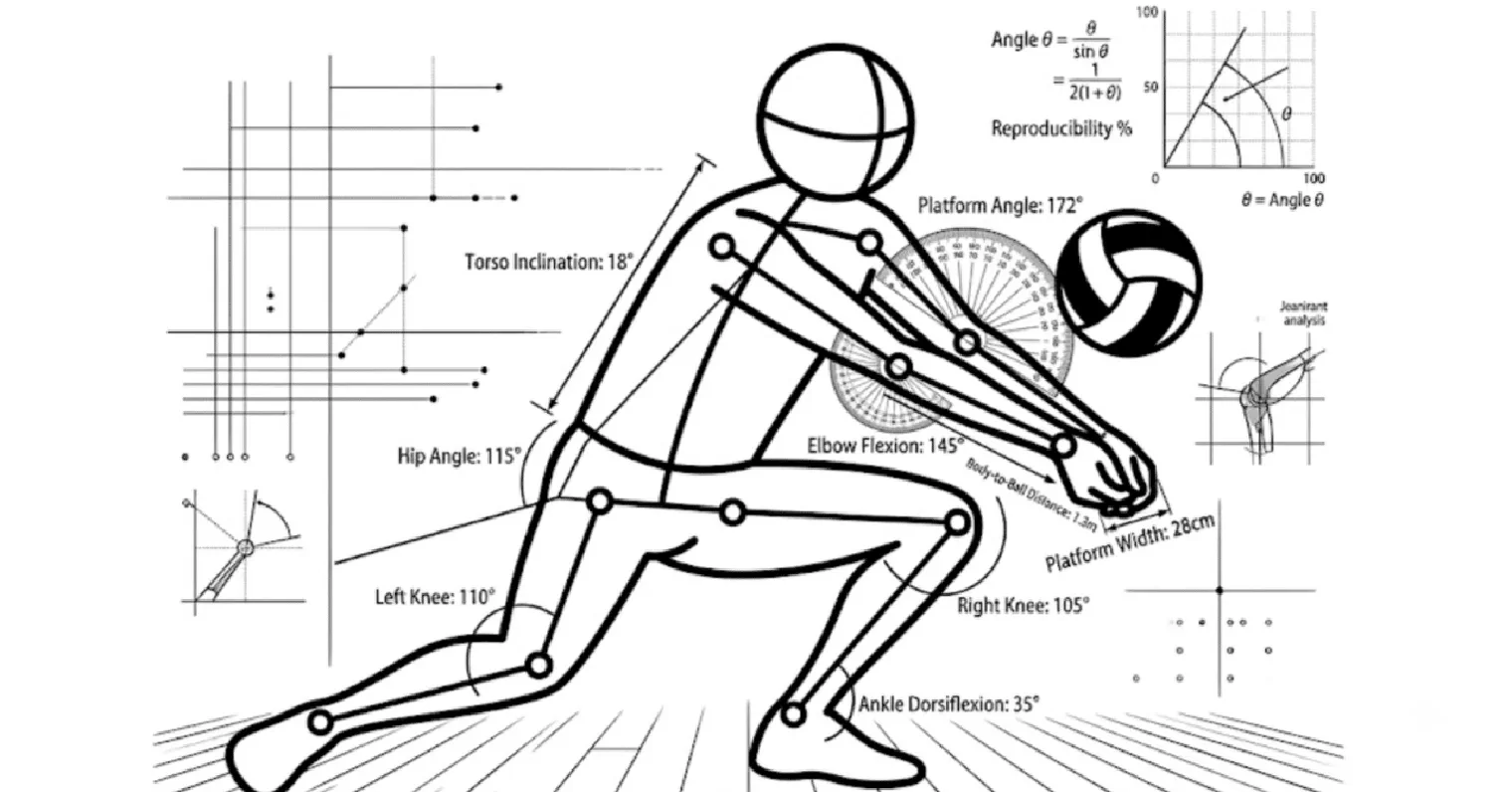
Hello, everyone. This time I want to write about a failure from my past: what happened to me after I chased the “perfect form” and repeated the same practice over and over, and what I learned from it.
The reason I fell into this trap lies in my days of almost obsessive repetitive practice in high school.
Back then I was a real “practice addict.” Morning practice and lunchtime practice, of course, and then in extra practice at night, I would keep hitting balls against the wall and practising reception until the security guard came round to check the building.
Obsessed with the “perfect form,” alone against the wall
My idol at the time was the great Brazilian national-team libero Sérgio Santos. I was a libero too, and I admired him intensely. I blindly believed, “I want to be like him. If I can pass with a form like his, I’m bound to get as good as he is.” So I spent hours on a lonely routine of my own: serving against the wall myself and passing the rebound.
Sérgio Dutra Santos (Wikipedia)
I seized on sequence photos of Sérgio’s reception (serve receive) that I found in magazines and online. I printed them enlarged, put a protractor on the printouts, and turned everything into numbers: the angle of his elbows, the angle between his body and upper arms, the angle of his platform, the width of his stance, how far his knees and toes turned out, even where his eyes were looking.
Using those numbers, I filmed my own form and kept correcting it so that it did not differ by even a millimetre from his, the form I had declared “perfect.” I repeated that process, single-mindedly, for about a year.
The end of all that training… why I got “worse” in matches
My understanding of skill acquisition at the time was this: “There is a perfect, correct form, and the only way to improve is to repeat it until your body remembers it.”
But to give you the conclusion, here is where all that intense training ended… I got thoroughly worse. After all that practice, all that time, all that research. My passes stopped reaching the setter at all. I agonized over it back then. I was proud of working harder than anyone and of following my coaches’ instructions more faithfully than anyone.
Looking back now, the reason is obvious. The Santos in those photos was a “clipped-out moment”: handling a relatively easy serve that came straight at him, taking it cleanly in front of his body.
As a result, I became better than anyone at “passing balls bouncing back off a wall” and at “imitating Santos.” But my ability to perform in chaotic, fast-moving, match-like situations had not improved at all. Worse still, I was so focused on reproducing the perfect, ideal form I had defined that I neglected actual reading of the server and positioning.
His real greatness was not his surface technique. It was his ability to go after the ball actively, backed by excellent anticipation. Yet I was so caught up in “the shape” that I had been doing repetitive practice far removed from real play.
Why did repetitive practice fail?
“I aimed for the perfect form and practised harder than anyone. So why isn’t it working?”
After I went on to university and met many knowledgeable people, I finally realized: “My approach was wrong.” Repetitive practice of a “perfect form,” with no real play involved, was wrong after all.
The unease I had been carrying deep down until then, “Can this kind of repetition really turn me into Santos?”, had been right.
Even “wasted repetition” in the past can become a weapon for the future
If I could go back to those days, I wouldn’t do the same thing again…
But it is also true that because of that seemingly “wasted time,” I tasted failure, was able to change direction, and became who I am today.
Thomas Edison, the great inventor, is said to have failed ten thousand times before he invented the light bulb. But he did not call it failure. He is said to have answered, “I have just found ten thousand ways that won’t work.”
My days of repetitive practice were exactly that. I proved, through my own experience and more deeply than anyone, that “repetitive practice cut off from real play cannot prepare you for the chaos of a match.”
Much later, I came across a coaching theory called the ecological approach. It was the moment when the unease I had felt deep down back then was put into words and organized into a system.
Precisely because of that intense failure and my conviction that “this doesn’t work,” when I met this concept the dots connected into a line and it made deep sense. That seemingly wasted detour may actually have been the shortest route to the essence. Today, I see the ecological approach as a very important concept in coaching.
The experience and the passion of those days, when I believed in the “perfect form” and worked so hard, will surely give a big push to what comes next. I would be glad if, using our past experience as a weapon, we could learn this new approach together from here.